

Table of Contents
- The Scale Modellers Supply Paints Arrive at HobbyTrax
- Why Weathering Makes a Model Railway Look Real
- SMS Premium Acrylic Lacquer Paints for Locomotives and Structures
- SMS Weathering Washes for Rivets, Panels and Grime
- Simple Weathering Techniques for Bogies, Underframes and Wagon Bodies
- Beginner Tips for Using SMS Paints and Washes
- Explore the SMS Paint Range at HobbyTrax
- Frequently Asked Questions
Last Updated: October 16, 2026
The Scale Modellers Supply Paints Arrive at HobbyTrax
The Scale Modellers Supply paints are now stocked at HobbyTrax, giving HO and OO modellers a proper range of acrylic lacquer colours and weathering washes to work with. The Scale Modellers Supply is an Australian paint maker.
This guide from HobbyTrax covers what has landed, how the two ranges differ, and how to start weathering your own layout.
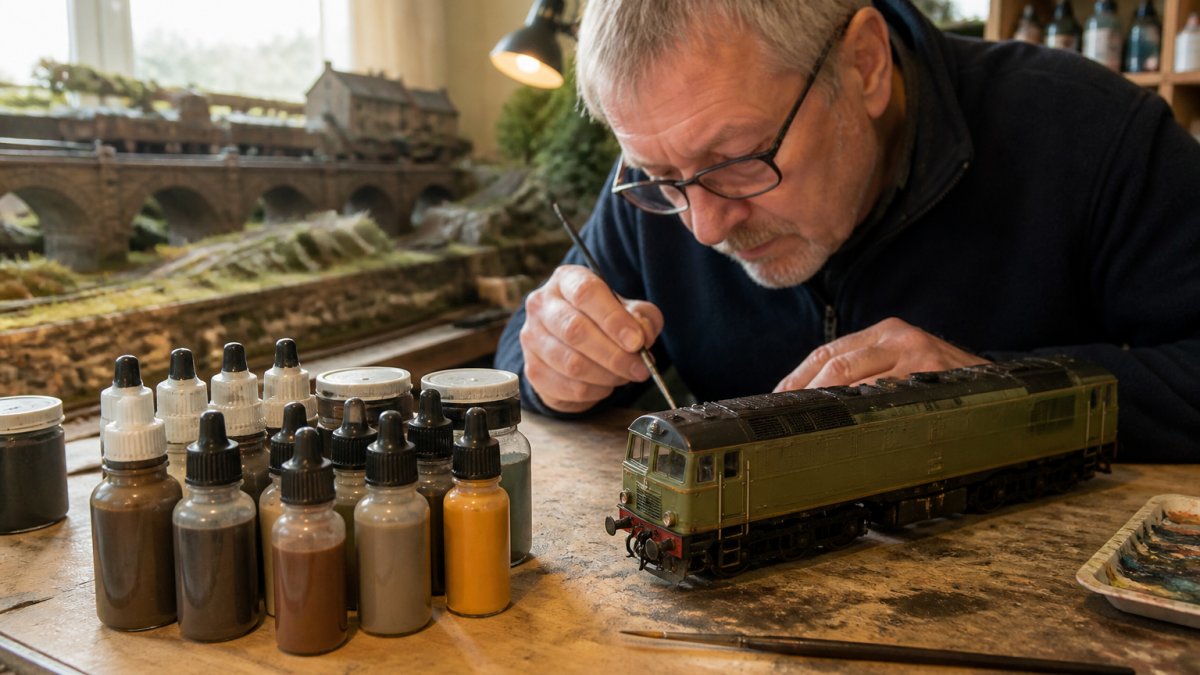
Weathering is the difference between a model that looks like a model and one that looks like a working railway. A fresh-out-of-the-box locomotive has flat, even colour. Real locomotives do not.
Why Weathering Makes a Model Railway Look Real
Weathering makes a model railway look real by adding the marks that real trains and buildings pick up over time. Rust, soot, dirt, oil stains, dust and faded paint all tell a story about where a locomotive has been.
Think about a working yard. Bogies sit in grime. Underframes collect oil and brake dust. Wagon bodies fade in the sun and streak below the door hinges.
- Rust builds around rivets, panel joins and water traps
- Soot darkens roofs and exhaust areas
- Dust settles on horizontal surfaces and wheel treads
- Oil stains gather around axle boxes and couplings
- Faded paint shows on anything left outdoors
Buildings and scenery benefit just as much. A station wall with grimy brick courses and a dusty platform edge reads as a place people actually use. Scenery looks better with muted, blended tones rather than uniform green.
The trick is restraint. A little grime in the right place beats a heavy coat everywhere.
SMS Premium Acrylic Lacquer Paints for Locomotives and Structures
SMS Premium Acrylic Lacquer paints are the base-coat range. They suit locomotives, wagons, structures and scenery, and they airbrush well when thinned and applied as the manufacturer instructs.
These are lacquer-based acrylics, not water-based acrylics. That matters. They behave differently and they need the correct thinner and a well-ventilated space. Always read the label and follow the maker's guidance on thinning and safety.
For structures and scenery, the same paints work on plastic, resin and other common modelling surfaces once the surface is prepared. A primer coat helps colour sit evenly.
Verified Colours in the Premium Range
The SMS Premium range includes colours that map directly onto Australian railway practice:
Colour |
Typical railway use |
|---|---|
Black |
Frames, underframes, chimney caps |
Charcoal |
Roofs, tender tops, sooty surfaces |
Brunswick Green |
Locomotive bodywork and tenders |
VLine Deep Indian Red |
VLine locomotive and carriage livery |
VLine Orange |
VLine accent panels and striping |
Grey |
Wagon bodies, concrete, weathered metal |
Buff |
Carriage interiors, station trim, brickwork |
Red Oxide |
Primed steel, wagon frames, rust base |
Sand |
Ballast, brick, dusty surfaces |
Brown |
Timber, sleeper tones, earth |
Having VLine colours on the shelf is a real plus for anyone modelling Victorian-era stock in HO or OO.
SMS Weathering Washes for Rivets, Panels and Grime
SMS weathering washes are the detail layer. They sink into rivets, panel lines and recesses, creating shadows and grime that flat paint cannot reproduce.
A wash is thin by design. It flows into low points and leaves a tint behind as it dries. That is exactly what you want around door hinges, panel joins and underframe detail.
Use washes after your base colour is fully dry. Apply a small amount, let it settle into the detail, then build up in thin layers rather than flooding the surface.
Verified Wash Colours and Their Railway Uses
The wash range covers the effects most layouts need:
Wash colour |
Where it works best |
|---|---|
Black |
Panel lines, exhaust staining, deep shadow |
Grey |
Dust build-up, faded surfaces, concrete |
Brown |
General grime, timber, track areas |
Dark Brown |
Heavy grime, axle boxes, underframes |
Umber |
Rust tones, earth, weathered steel |
Sand |
Dust, ballast, dry and faded surfaces |
Olive |
Faded green paint, mossy and damp areas |
A brown wash over a grey wagon body instantly reads as a wagon that has been in service for years.
12V DC 10-Channel Switchable Power Distribution Board Mk 2 →
Simple Weathering Techniques for Bogies, Underframes and Wagon Bodies
Start with the parts nobody looks at closely, because that is where you learn fastest. Bogies and underframes are perfect practice pieces.
A simple working method:
- Paint the base colour and let it dry fully
- Apply a Dark Brown or Umber wash into the recesses
- Wipe or blend the edges so it is not uniform
- Add a light dusting of Sand or Grey wash on top
- Leave it to dry and check it under your layout lighting
For wagon bodies, work from the bottom up. Grime gathers low and streaks downward. A thin Brown wash pulled down from the door hinges gives an instant weathered look.
Locomotives reward patience. Build soot around the exhaust, grime around the running gear and a faded tone on sun-exposed panels. Layer by layer, not all at once.
Buildings and scenery follow the same logic. A Grey or Sand wash on brickwork, plus a touch of Umber at the base, adds age without repainting anything.
Beginner Tips for Using SMS Paints and Washes
The best results come from small steps and a bit of patience. Here is what we suggest to anyone starting out.
- Test on spare plastic or an old wagon shell first
- Apply thin layers and build the effect gradually
- Let each layer dry before adding the next
- Work in a well-ventilated area and follow safety guidance
- Read the instructions for each product separately
- Keep your brushes clean and matched to the job
A common mistake is going too heavy too soon. Once a model is dark with grime, it is hard to bring it back. Build up slowly and stop earlier than you think you should.
For powering layout lighting and accessories while you work on your models, the 12V DC 10-Channel Switchable Power Distribution Board Mk 2 lets you run station lights, signals and building lighting from one supply through up to ten switched channels.

Explore the SMS Paint Range at HobbyTrax
The Scale Modellers Supply range is now available, and it covers both ends of the job: solid base colours for locomotives, wagons and structures, and washes that bring out the detail.
If you are new to weathering, start with one base colour and one or two washes. Learn how they behave on scrap material, then apply what you have learned to your layout. If you are an experienced modeller, the VLine colours and the wash range give you options that fit straight into an Australian-themed layout.
You can browse the full range at our SMS model paints collection. If you are unsure which colour or wash suits your project, ask us about compatibility before you buy, and we will point you in the right direction. We would also enjoy seeing your finished weathering work, so feel free to share a photo of your layout with us.
Frequently Asked Questions
What is the difference between SMS Premium Acrylic Lacquer paints and SMS Weathering Washes?
SMS Premium Acrylic Lacquer paints are designed for painting locomotives, wagons, structures and scenery, and can be used with an airbrush where appropriate. SMS Weathering Washes are thinner formulations for enhancing rivets, panel lines and surface details, creating shadows and grime. They serve different purposes, so check the manufacturer instructions for each product rather than assuming they share the same thinners or techniques.
Can I use SMS paints on HO and OO scale models?
Yes. SMS Premium Acrylic Lacquer paints and Weathering Washes are suitable for HO and OO scale models, including locomotives, rolling stock, buildings and scenery. The finer details on smaller scales benefit from thin, gradual layers. Test on a spare piece first to confirm the finish and compatibility with your chosen surface.
Do I need special equipment to use SMS paints?
An airbrush is useful for the Premium Acrylic Lacquer range when painting locomotive bodies or structures, but brush application works well for finer detail. Weathering washes are typically applied by brush. Always follow the manufacturer's instructions for thinning, application and safety, and work in a well-ventilated area.
How do I start weathering my model railway if I am new to it?
Begin with a spare wagon or piece of scrap material. Apply thin layers of weathering wash and build the effect gradually rather than trying to achieve the final look in one pass. Focus on areas such as bogies, underframes and wagon bodies where dirt, rust and grime naturally collect. Follow the manufacturer instructions for each product.
A note from HobbyTrax: This article reflects our practical modelling experience and information available at the time of writing. Products, specifications and technology can change, so check current manufacturer instructions and compatibility before starting a project.