

Table of Contents
- HobbyTrax Expands Modular Railway Bridge Systems for HO/OO Layouts
- Modular Plate Girder Bridge: Practical Applications for Crossings and Elevated Track
- Modular Brick Viaduct Bridge Kit: Traditional Architecture in Expandable Sections
- Modern Modular Viaduct System: Contemporary Infrastructure for Today's Layouts
- Modular Model Railway Platform System: A Complementary Range
- Why Modular Construction Suits Model Railway Bridges and Viaducts
- Compatibility and Planning: What to Check Before You Buy
- Where to Find Out More
- Frequently Asked Questions
Last Updated: 12 October 2026
HobbyTrax Expands Modular Railway Bridge Systems for HO/OO Layouts
HobbyTrax is expanding its range of modular railway bridges, viaducts and platform systems for HO/OO layouts. The range covers plate girder bridges, brick viaduct kits and a modern viaduct system, all built around the same idea: buy a section, place it, and add more later as the layout grows. National Model Railroad Association standards and recommended practices
For anyone planning elevated track, a river crossing or a station approach, modular bridge systems solve a common problem. A fixed bridge has to be right the first time. A modular one can be extended, shortened or moved when plans change.
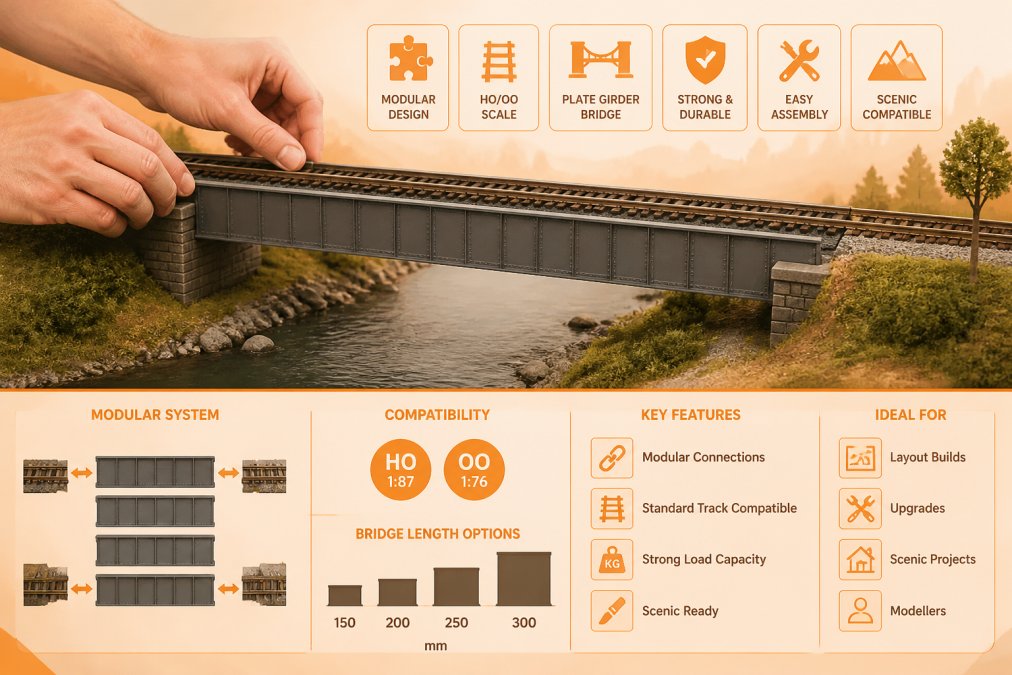
Modular Plate Girder Bridge: Practical Applications for Crossings and Elevated Track
A plate girder bridge is the workhorse of railway crossings. Two deep side girders carry the track deck, and the look suits everything from a country creek crossing to an industrial spur.
Our modular plate girder bridge lets you build the span you need. Each section joins to the next, so a short crossing and a long elevated run can use the same components. Modular Plate Girder Bridge
Where it earns its place:
- Creek and river crossings on a scenic layout
- Elevated track sections that clear lower scenery
- Industrial sidings running above ground level
- Rural branch lines where a simple span looks right
The open girder sides also give you room for detailing. Add handrails, walkways or a weathered finish without hiding the structure.
Modular Brick Viaduct Bridge Kit: Traditional Architecture in Expandable Sections
Brick viaducts defined railway architecture through the steam era, and they still look right on a heritage or transition-era layout. The modular brick viaduct bridge kit recreates that look in sections that join end to end. Modular Brick Viaduct Bridge Kit
Build a short two-arch crossing or a long curving viaduct. Each kit adds more arches to the run, so the structure grows with your scenery.
The brick finish suits:
- Valley and gorge crossings
- Town approaches where the line runs above street level
- Heritage and preserved railway scenes
- Any layout where stone or brick reads as period-correct
What most guides miss is that viaduct height matters more than length. Check the clearance underneath before you commit, especially if you plan to run a road, path or watercourse below.
Modern Modular Viaduct System: Contemporary Infrastructure for Today's Layouts
Modern viaducts use clean concrete lines and simple piers. Our modern modular viaduct system brings that look to layouts set in the present day. Modern Modular Viaduct System
The appeal is flexibility. Sections combine to match the span you need, and the plain surfaces take weathering, graffiti decals or signage well. If you model a current-era commuter line or freight corridor, this range fits without looking out of period.
Pair it with the platform system and you have the bones of a station on a raised section, which is a common arrangement on real networks.
Modular Model Railway Platform System: A Complementary Range
Platforms and bridges solve the same planning problem. Our modular model railway platform system uses a section-based approach, which means a station can be extended or reshaped as your track plan changes.
Used together, bridges and platforms let you build a believable elevated station without cutting custom parts for every piece.
Hobby Trax Helpsheet - Smoother running with Loksound decoders →
Why Modular Construction Suits Model Railway Bridges and Viaducts
Modular construction is the practice of building a structure from standard sections that join together, rather than from one fixed piece. It suits bridges and viaducts because spans are the part of a layout most likely to change.
The practical wins:
- Layout flexibility: move or extend a span without rebuilding scenery
- Expandable designs: add sections as the layout grows
- Customisable lengths: match the gap you actually have
- Easier planning: work out the span before you cut timber
- Better integration: blend new sections into existing scenery
There is a trade-off. Modular joints need care. If a join sits slightly high or low, wheels will find it. Check alignment at every section before you fix anything down permanently.
Compatibility and Planning: What to Check Before You Buy
Check the product page for the confirmed scale before ordering. Our bridge and viaduct ranges are listed for HO/OO where the specifications state it, and we do not assume a section fits a scale it was not made for.
Work through this list before you buy:
- Confirm the scale stated on the product page
- Measure the actual gap, including clearance underneath
- Check your longest locomotive and carriage for clearance
- Plan how many sections the span needs
- Decide how the bridge meets the baseboard at each end
- Allow for track underlay or ballast height
- Test alignment with track laid loose before fixing
If a decoder or locomotive is misbehaving while you test, our free helpsheets cover how to program CVs and smoother running with Loksound decoders. A DCC decoder tester also lets you check a decoder before it goes anywhere near a locomotive.


Where to Find Out More
The full range sits in our bridges and viaducts collection. If you are unsure which system suits your layout, contact us and we will help you work out the span and clearance.
We would also like to see your build. Share a photo of your bridge or viaduct in place, whether it is a first attempt or a finished scene.
Planning an elevated section is where most layouts stall. HobbyTrax stocks modular bridges, viaducts and platforms so you can plan the span, test the clearance and extend the structure as your layout grows. Browse the modular bridge range or contact us for help matching sections to your track plan.
This article was written with the best intentions and reflects personal views. Products and technology change constantly, so while we try our best to provide correct information, always check the current product page and the manufacturer's instructions before buying or installing.
Frequently Asked Questions
Are HobbyTrax modular railway bridges compatible with HO and OO scale layouts?
Compatibility depends on the specific product. HobbyTrax lists scale information on each product page, so check the specifications for the bridge or viaduct you are considering. HO and OO scales share the same track gauge (16.5mm), which means track from either scale can sit on the same bridge deck. However, clearances, bridge width and structural proportions may differ between kits. Always confirm the listed scale and dimensions before purchasing to avoid fit issues on your layout.
Can I combine multiple bridge sections to span a longer gap?
The modular design of these bridge and viaduct systems allows you to join sections to create longer spans. Each kit is manufactured to connect with others in the same range, so you can extend a plate girder bridge or build a longer brick viaduct by adding more modules. Check the product listing for the specific connection method and any recommended maximum unsupported span. For longer crossings, consider adding intermediate piers or supports to keep the structure stable and level.
What is the difference between the Modular Plate Girder Bridge and the Modern Modular Viaduct System?
The Modular Plate Girder Bridge represents a traditional steel girder structure, common on industrial and rural railway lines where track crosses roads, waterways or valleys. It suits layouts set in earlier eras or industrial settings. The Modern Modular Viaduct System reflects contemporary railway infrastructure, with cleaner lines and a style suited to present-day or recent-era modelling. Both are modular, but they serve different visual and historical contexts on a layout. Choose based on the era and setting you are modelling.
Do I need special tools or skills to assemble these modular bridge kits?
Assembly requirements vary by product. Most modular bridge and viaduct kits are designed for straightforward construction, but you should check the individual product page for details on what is included and any recommended tools. Basic modelling tools such as a hobby knife, fine files and suitable adhesive are commonly used. If you are new to kit building, start with a smaller module to familiarise yourself with the process before tackling a full viaduct. Our team is happy to help with compatibility questions.