

Last Updated: November 8, 2026
Quick Summary
A model railway starter for adults works best built from chosen components rather than a boxed set: one reliable locomotive, track with curves suited to your longest vehicle, and a controller matched to it. HobbyTrax can help you assemble a compatible setup from scratch.
- HO scale runs at 1:87 and suits most adults, with a double loop and siding needing about 2.4 m × 1.2 m.
- DC controls one track circuit at a time and is simpler and cheaper to start; DCC puts a decoder in each locomotive.
- Match curve radius to your longest locomotive and carriage, not the shortest shunter you own today.
- Build in stages: get one train running reliably, expand the track, add turnouts and wiring, then scenery.
- A complete starter set includes track, controller and power supply; a train pack may include only the train.
Table of Contents
- Why Adults Build Model Railways from Components, Not Boxed Sets
- HO Scale Model Trains: The Practical Choice for Most Adults
- DC vs DCC Model Trains: Which Control System Suits a Beginner?
- Choosing a Locomotive: New or Pre-Owned Model Trains
- Model Railway Track and Controller: Matching Radius, Turnouts and Power
- Do You Need a Boxed Model Train Starter Set?
- Your First-Purchase Checklist and Staged Build Plan
- Ask HobbyTrax to Help Assemble Your Compatible Setup
- Frequently Asked Questions
Why Adults Build Model Railways from Components, Not Boxed Sets
A model railway starter setup for adults rarely looks like the box under a Christmas tree. Most adult modellers we talk to at HobbyTrax want something they can extend, rewire and run for years, not a fixed loop with a controller they may outgrow in a month.
The hobby rewards patience. You buy one reliable locomotive, a length of track and a controller that suits it, then add turnouts, wiring and scenery as your confidence grows.
That approach also protects your wallet. Every component you choose deliberately stays useful when the layout expands.
Below, we explain how to build that first setup properly, scale by scale and wire by wire, so the train runs on day one and still runs in five years.
HO Scale Model Trains: The Practical Choice for Most Adults
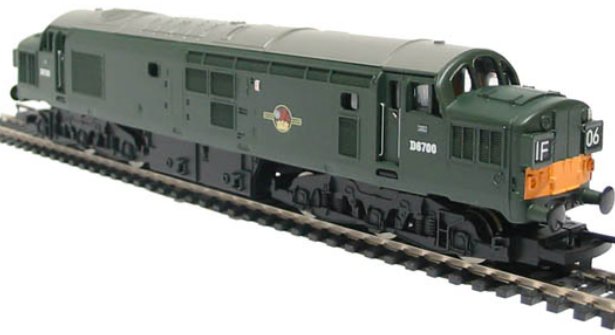
Hornby R2471A Class 37 D6700 in BR green with split head code
HO scale model trains are a sensible default for many adults starting out. HO runs at 1:87 and sits comfortably between the tiny and the sprawling. But the right scale for you depends on three practical things: how much room you have, how steady your hands are, and how well you can see fine detail.
Here is how the main scales compare for an adult beginner, with realistic layout footprints:
Scale |
Ratio |
Typical first layout footprint |
Handling |
Eyesight demand |
Best for |
|---|---|---|---|---|---|
N |
1:160 |
About 1.2 m × 0.6 m for a double loop |
Fiddly; fine couplers and small wheels |
Higher; detail is very small |
Tight rooms, long trains in a small space |
HO |
1:87 |
About 2.4 m × 1.2 m for a double loop with a siding |
Comfortable; parts are easy to grip |
Moderate |
Most adults, widest range |
OO |
1:76 |
Similar to HO, slightly larger |
Comfortable |
Moderate |
British outline fans |
Those footprints are starting points, not rules. You will want room for a siding and a little scenery, so plan for the larger figure if you can.
HO and OO share the same 16.5 mm track gauge, which is why the two are often discussed together. The difference is the body scale: OO models are slightly larger than HO, so a OO locomotive will look oversized next to HO rolling stock even though both run on the same track. Pick one and stay with it.
N scale saves space but demands steadier hands for coupling and track cleaning. Our owner moved from N to HO as his eyesight and hand steadiness changed. If you wear reading glasses or find small parts frustrating, HO or OO will be kinder to you.
A common pattern is to start in N because the layout looks impressive in a small room, then move to HO once the fiddly coupling becomes a chore. Neither choice is wrong, but be honest with yourself about handling before you commit to a scale, because your locomotive, track and rolling stock all need to match.
DC vs DCC Model Trains: Which Control System Suits a Beginner?
DC model trains control one track circuit at a time with a simple controller. DCC model trains put a decoder in each locomotive so you can drive several independently on the same track. For a first layout, DC is simpler and cheaper to start. DCC rewards you later.
DC suits a single loop and one or two trains. You control speed and direction from the throttle, and isolating sections let you park one locomotive while another runs.
DCC needs a command station, decoders and more wiring thought, but it can remove section switches and lets sound and lighting follow each locomotive. If you are weighing up the two properly, our guide to DCC vs DC model railway layouts walks through the trade-offs in detail.
A common mistake is buying a DCC system before understanding your locomotives. Check whether each model is DCC-ready or needs a decoder fitted, and never assume a decoder is plug-and-play across brands.
Choosing a Locomotive: New or Pre-Owned Model Trains
Start with one locomotive you trust, not five you hope will run. A single reliable engine teaches you more about track, power and maintenance than a shelf of projects.
New locomotives give you warranty support and current tooling. Pre-owned models stretch your budget further and often come in older liveries that suit a period layout. The catch is condition: check the wheels, pickups and running gear before you commit.
At HobbyTrax we stock both new and pre-owned models. Read how we test pre-owned model trains before you buy second-hand.
Watch out: a bargain locomotive with a cracked gear tower or missing coupler can cost more to fix than a good used one. Check the condition carefully before you buy.
Model Railway Track and Controller: Matching Radius, Turnouts and Power
Track, controller and wiring must agree with each other and with your locomotives. Get this trio right and everything else follows. This is where most first layouts go wrong, so work through it in order.
Curve radius. Model track is sold in named radii, and the number matters more than the brand. In HO/OO, first-radius curves are the tightest and will derail long passenger cars and strain bogies; second and third radius curves are more forgiving.
Turnouts. A turnout (point) lets a train leave the main line for a siding. Check the frog type: insulfrog turnouts have a plastic frog that some short-wheelbase locomotives stall on, while electrofrog turnouts need wiring, so the frog polarity changes with the blades. Plan how you will switch or wire each one before you fix it down.
Controller or DCC system. A DC controller will not normally run a DCC-fitted locomotive, and a DCC command station may be able to run a DC loco but you will need to confirm this. It is best to match the controller to your system and to the locomotives you actually own. If you are weighing up the two properly, our guide to DCC vs DC model railway layouts walks through the trade-offs in detail.
Power supply and wiring. The power supply must suit the controller, not the other way round. Never assume a power pack from an old set suits a new controller. Isolate power before any wiring work, check polarity, and test with one locomotive before connecting everything.
For track, turnouts, DCC systems and cable, browse our track and turnouts collection and DCC systems range, and our cable and wire collection for the wiring side.
Watch out: buying a DCC system before you understand your locomotives is a common mistake. Check whether each model is DCC-ready or needs a decoder fitted, and never assume a decoder is plug-and-play across brands.
Do You Need a Boxed Model Train Starter Set?
A boxed model railway starter set is convenient, but adults often outgrow it. The included controller is usually basic, the track is a fixed oval, and the train may not be the one you actually wanted.
Selected components cost a little more thought but give you better compatibility, flexibility and value over time. You choose a controller that suits your plans, track you can extend, and a locomotive worth keeping.
Be clear about what you are buying, too. A complete starter set includes track, controller and power supply. A train pack may include only the locomotive and rolling stock, with track and controller sold separately. Read the contents list before ordering.
HobbyTrax will supply the components, and we are happy to help you assemble a compatible setup from scratch.
Your First-Purchase Checklist and Staged Build Plan
Build in stages. Trying to do everything at once is the fastest way to lose enthusiasm and money.
- Get one train running reliably. Locomotive, a simple loop of track, a matched controller and power supply.
- Expand the track. Add straights and curves once the first loop runs cleanly.
- Add turnouts and wiring. Introduce a siding, then wire it properly with insulated joints where needed.
- Build scenery gradually. Start with a baseboard surface, then add ballast, ground cover and structures.
Before you buy, run through this checklist:
- Scale chosen and consistent across locomotive, track and rolling stock
- Curve radius suits your longest vehicle
- Controller matches DC or DCC and the locomotive
- Power supply suits the controller
- Couplings compatible across your rolling stock
- Basic tools on hand for track cleaning and maintenance
For tools, our guide to essential maintenance tools for beginners covers what you actually need. When you are ready for a baseboard, read which baseboard material suits your layout, and keep your track running with track inspection and maintenance advice.
Mistakes to avoid: mixing scales, tight curves with long stock, unsuitable controllers, and buying too much at once.
Ask HobbyTrax to Help Assemble Your Compatible Setup
Growing a collection is part of the fun, and it rarely stops at one engine. You can watch the short "I couldn't just buy one new engine. Meet Jean! Can you buy only one?" on Granddad's Trains on YouTube.
If you are unsure whether a locomotive, decoder, controller and track will work together, ask us before you order. We would rather answer a compatibility question now than have you discover a mismatch after it arrives. Tell us your scale, your control system and what you want to run, and we will help you plan the next stage. Browse our pre-owned collection, cable and wire and scenery range when you are ready.
A note from HobbyTrax: This article reflects our practical modelling experience and information available at the time of writing. Products, specifications and technology can change, so check current manufacturer instructions and compatibility before starting a project.
Frequently Asked Questions
What should an adult buy to start a model railway?
Start with one locomotive, a compatible controller, a power supply, a loop of track and a few wagons. Choose a scale first, then decide between DC and DCC. HobbyTrax can help you select components that work together. Begin with a simple oval, get one train running reliably, then expand track and add turnouts. This staged approach keeps costs manageable and avoids buying items you will outgrow.
Are model train starter sets worth it for adults?
Boxed sets are convenient for a first run, but adults often outgrow the included controller, limited track or basic train. A model railway starter built from selected components can offer better compatibility and flexibility. You choose the scale, control system and track radius that suit your space and eyesight. The trade-off is more research upfront. HobbyTrax can help you match a locomotive, controller and track so you avoid incompatible parts.
What is the difference between a train pack and a starter set?
A complete starter set usually includes a locomotive, rolling stock, track, controller and power supply. A train pack typically contains only the locomotive and perhaps a few wagons, with track, controller and power supply sold separately. Always check the contents list before buying. If you already own track and a controller, a train pack can be better value. If you are starting from scratch, you will need to add the missing items to run the train.
Should a beginner choose HO/OO or N scale?
HO/OO scale suits adults who want easier handling, better visibility and a wide range of models. N scale fits smaller spaces but demands steadier hands and sharper eyesight. Consider your available space, whether you plan to add fine detail, and how comfortably you can handle small parts. Many adults start with HO/OO for reliability and switch to N later if space is tight. HobbyTrax stocks components for both scales.
